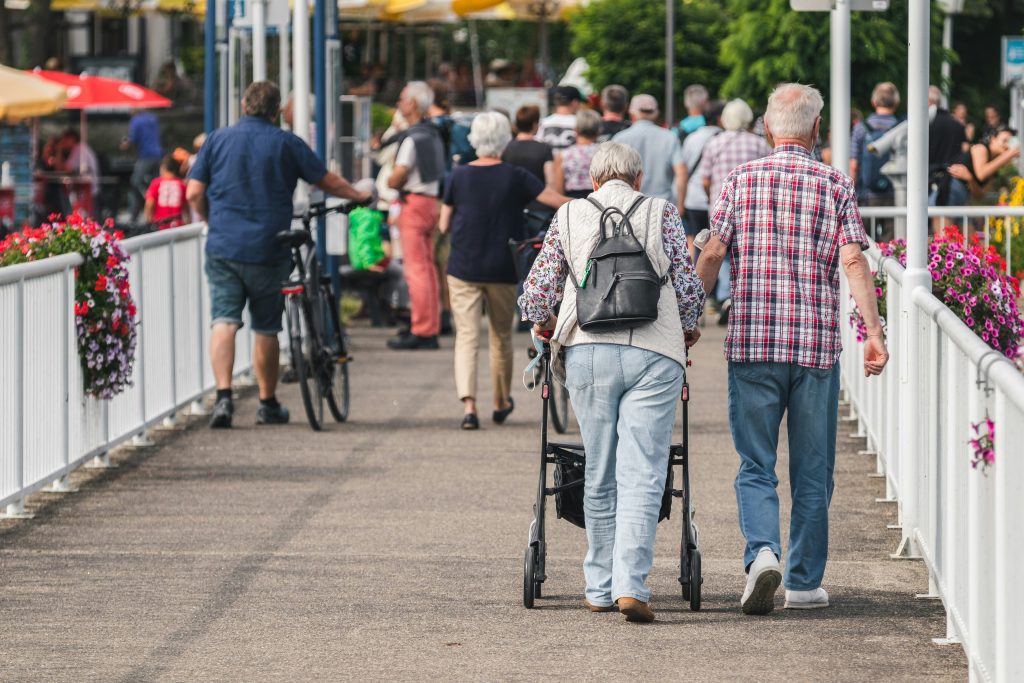
When we think about staying active as we get older, walking often comes to mind first.
And for good reason. Walking is accessible, supports cardiovascular health and keeps us moving.
But there is another part of staying active that can sometimes get overlooked: maintaining strength.
Strength isn’t just about lifting weights or going to the gym. It is involved in many of the ordinary things we want to keep doing without giving them much thought.
Getting up from a low chair. Carrying the shopping inside. Climbing stairs. Lifting a suitcase into the car. Gardening. Getting down onto the floor and, importantly, getting back up again.
Strength changes as we age
Some loss of muscle mass and strength occurs naturally with age, but age is only part of the picture.
How active we are matters too.
If muscles aren’t regularly asked to work against resistance, they have less reason to maintain their capacity. Illness, injury or periods of reduced activity can also mean we temporarily do less than we used to.
The encouraging part is that muscles remain responsive to exercise as we get older.
You don’t have to have spent your life lifting weights to benefit from strength training.
What does the research recommend?
The World Health Organization recommends muscle-strengthening activities involving the major muscle groups on at least two days each week for older adults.
It also recommends activities that combine strength and balance, particularly as we get older, to help maintain physical function and reduce the risk of falls.
This doesn’t mean everyone over 65 suddenly needs a complicated gym program.
Strengthening simply means asking muscles to work against some form of resistance.
That resistance might come from weights or gym equipment, but it could also come from resistance bands, body weight or carefully chosen exercises at home.
Helpful to know
Walking and strengthening aren’t interchangeable.
Walking provides many health benefits, but a regular walk doesn’t necessarily challenge all of our muscles enough to maintain strength.
Think about standing up from a chair.
Your leg and hip muscles have to produce enough force to lift your body weight. If that becomes harder over time, walking more may be beneficial for your general activity, but specifically strengthening those muscles may also be important.
The same applies to carrying shopping, climbing stairs or lifting something overhead.
We tend to notice the importance of strength when an everyday task that used to be easy starts requiring more effort.
Strength and balance work together
Balance is sometimes thought of as something separate that we practise by standing on one leg.
In reality, staying upright and moving safely involves several systems working together.
Strength is one of them.
If you stumble, step off an uneven surface or need to change direction quickly, your muscles help control your body and respond to that change.
This is one reason current physical activity recommendations for older adults include activities that challenge both strength and balance.
What might getting stronger actually look like?
It depends very much on where you’re starting.
For one person, it might mean using weights at the gym.
For someone else, it could be practising controlled sit-to-stands from a chair, using resistance bands or doing supported exercises at home.
If you’ve been inactive for some time, starting with a small amount and gradually increasing is reasonable. The World Health Organization specifically advises that people who are inactive begin with smaller amounts of physical activity and build up over time.
You don’t have to reach a particular fitness level before exercise becomes worthwhile.
What if pain is making exercise difficult?
This is where individual circumstances matter.
An arthritic knee, sore shoulder, previous injury or recurring back pain may make some exercises uncomfortable or unsuitable. That doesn’t necessarily mean strengthening is off the table.
Sometimes the exercise itself can be changed. The amount of resistance, range of movement, number of repetitions or type of activity may need to be adjusted.
If pain, balance problems or significant weakness are limiting your activity, it may be helpful to discuss this with an appropriately qualified health professional before starting or substantially changing an exercise program.
The aim isn’t to exercise like you did at 25.
It’s to maintain enough strength and capacity to keep doing the things that matter to you now.
At Feel Amazing Wellness Centre in Chatswood, our practitioners provide individual assessment and care for a range of musculoskeletal concerns. If pain or discomfort is making everyday movement more difficult, our team can help you determine whether one of our services may be appropriate for you.
References
World Health Organization. WHO Guidelines on Physical Activity and Sedentary Behaviour. 2020.
Bull FC, Al-Ansari SS, Biddle S, et al. World Health Organization 2020 guidelines on physical activity and sedentary behaviour. British Journal of Sports Medicine. 2020;54:1451-1462.
The Conversation. “Even one strength training session a week could make a difference.” ScienceDaily. ScienceDaily, 2 October 2026.